
If your mould has any numbering or lettering, see if any of the images below match your mould. If they do see additional info next to the image
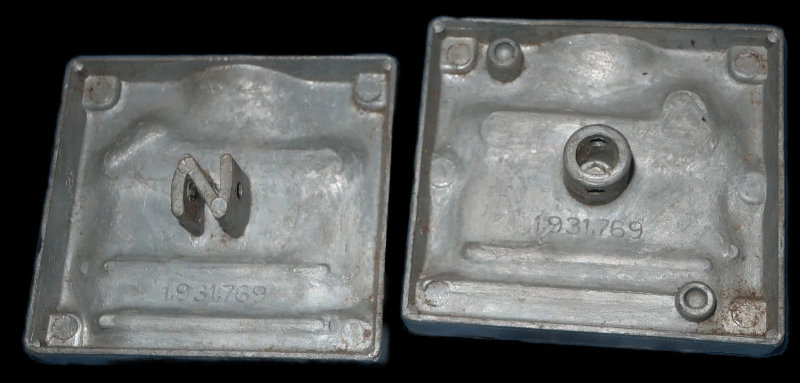 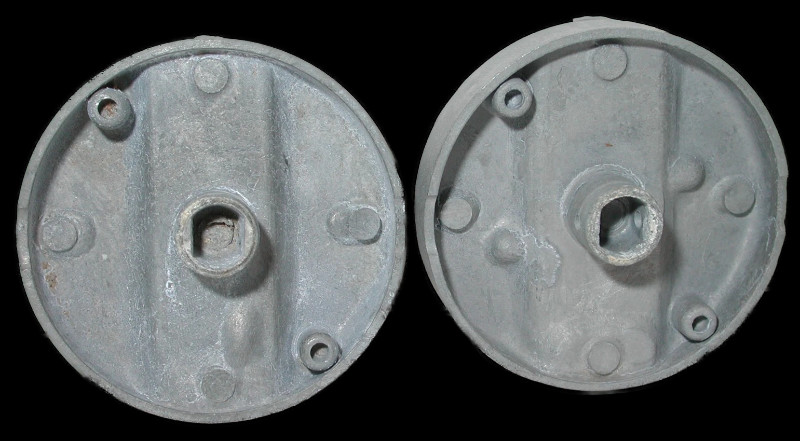 |
A. C. Gilbert 1931-1942There were 44 molds produced by the A. C. Gilbert Company. 29 semi flats and 15 slush molds. The square pair of moulds is for pouring solid models while the round pair is for pouring slush or "hollow" models. Not all moulds were numbered and sometimes the number is a patent number rather than a model number. |
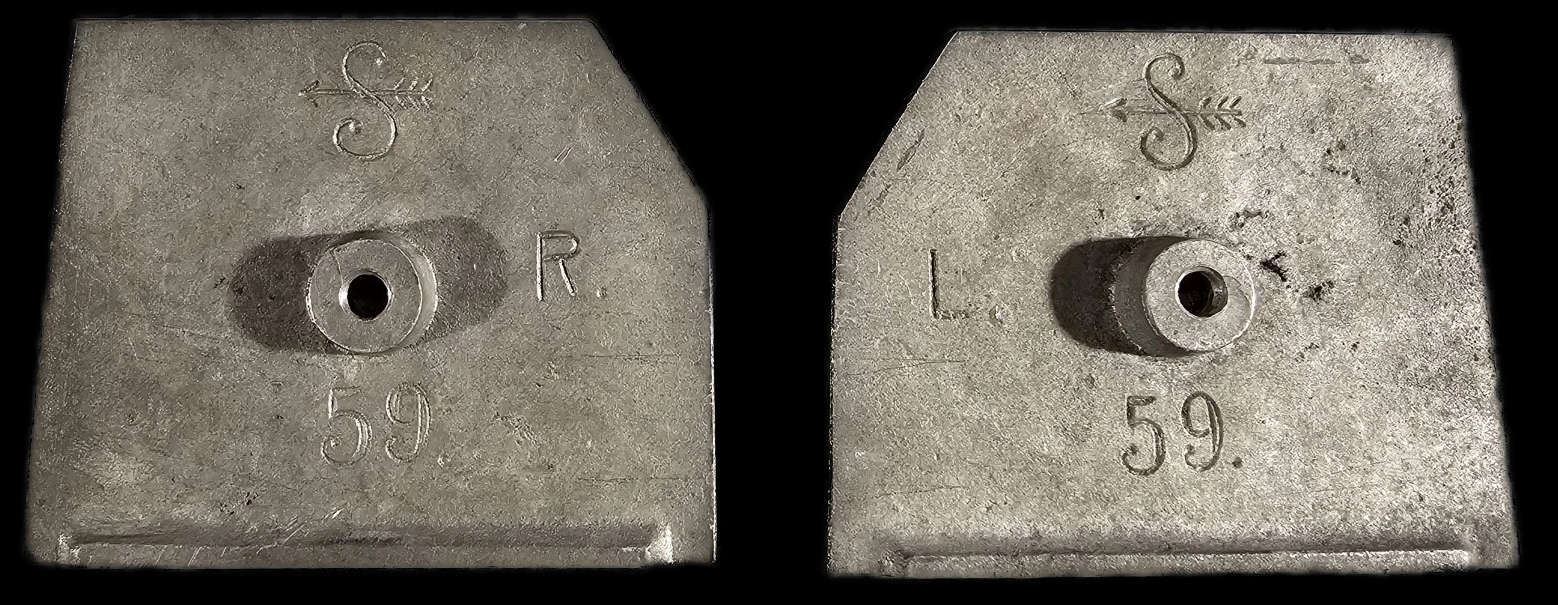 |
Gebr. Schneider 1904-early 1930'sThe Schneider moulds in mhy opinion are the easiest of all the moulds to pour near perfect models from . They are known by the S with the arrow thru the middle. The moulds were identified Right and left by an L on one mould and an R on the other. Additionally one of the halves had the catalog number on it. The moulds also had a lip at the bottom of each mould. Schneider is much copied, however there are clues as to wether the mould is a schnieder or not. Chief among them is the S with an Arrow, if it is not a crisp sharp stamp it is probably not a Schnieder. |
Junior Caster By Rapaport 1930-bef.WWIIJunior Caster appears to be the first of the Rapaport Bros. companies. the Backs of the moulds were typically flat with a lip at the bottom of the mould. Later the company became Home Foundry, mostly using the same moulds, however the backs had ribs. I have seen early Home Foundry moulds stamped with the Junior Caster Circle with a rib going right thru the logo. |
|
Home Foundry
|
|
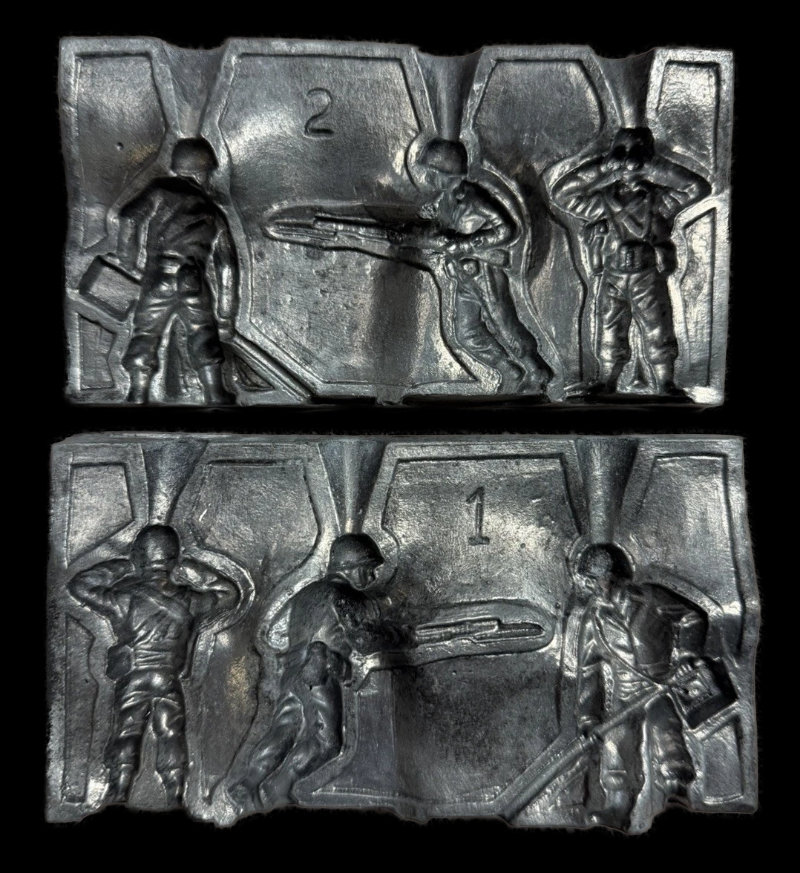 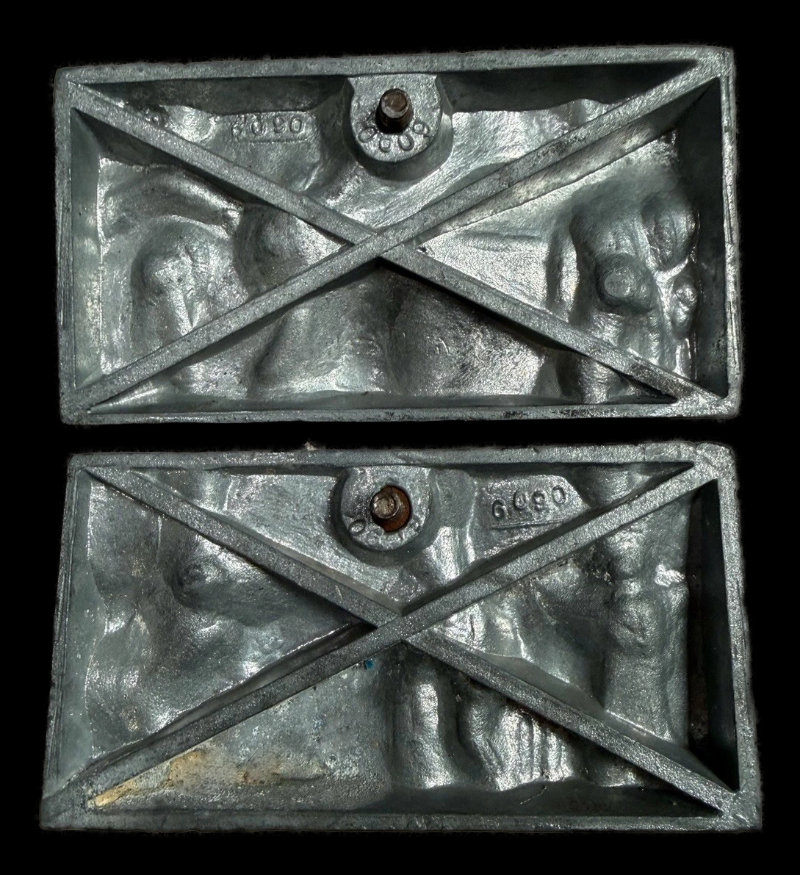 |
RAPCO 1965-1969The RAPCO moulds started adding a "1" and "2" on the inside or face of the mould. I have not seen the number on the face with any other mould. The back of the mould has the standard X cross support along with the threaded stud and the standard 4 digit number typical of home Foundry. This particular Mould is the 6090 - Mop Up Squad. |
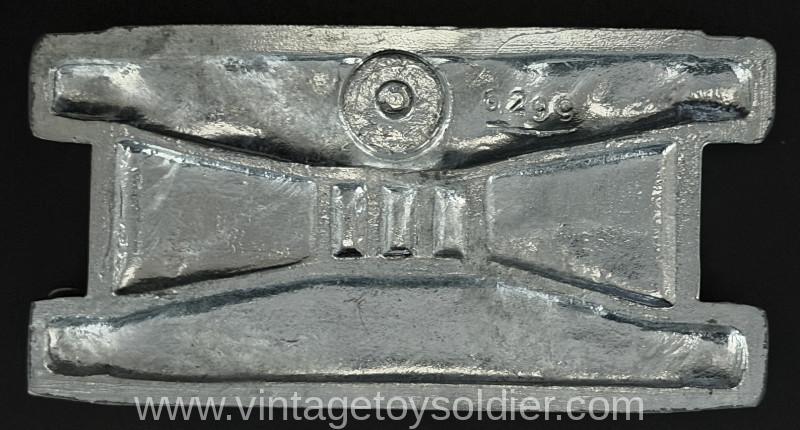 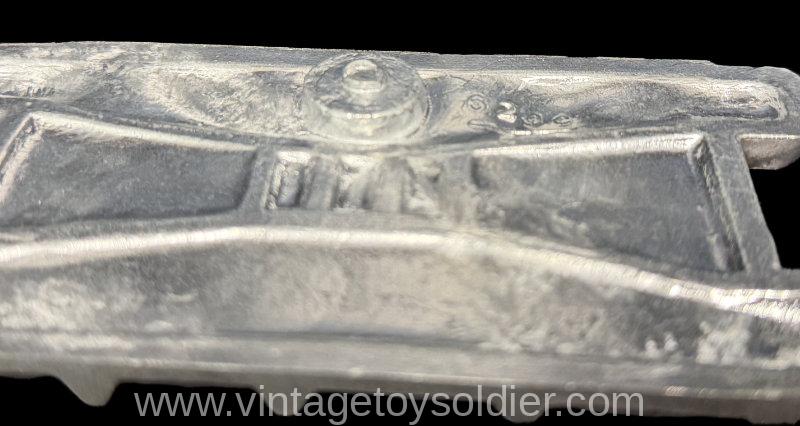 |
REB/Castings/Dunken Modern 1972-PresentI have orderd metal moulds from Dunken ( who seems to have the remaining stock from REB/Castings. The moulds appear to be from the same patterns. The major difference, aside from them being shiney and new, is that the Boss is filled in solid rather than threaded. Note all moulds have the Home foundry/REB catalog number on body of the mould, look closely and you can see 6299 adjacent to the boss. In the second image you can see the Boss filled in more clearly. |
Comments