
 When I started in this hobby I really had no idea about its history. I just wanted to collect a few models. That evolved into painting them, then making my own using purchased moulds which became actually making my own moulds, and now here I am using moulds that are nearly 100 years old trying to recreate models from the past.
Somewhere along the line I got curious as to what the history of toy soldiers really was. This page is an ever evolving page on the history of Vintage toy soldiers. I will update this page as I find new information.
Early History of Toy Soldiers
Much of the following history is based on an article found at the Toy Soldier Company website.
Toy soldiers have been collected since the time of the Pharaohs. First made from wood, stone, clay and metal for the nobility and the rich, it wasn’t until the end of the 18th century that toy figures – or military miniatures – were first mass-produced.
In the 19th century relatively small quantities by the Parisian firm of Mignot, founded in 1825, 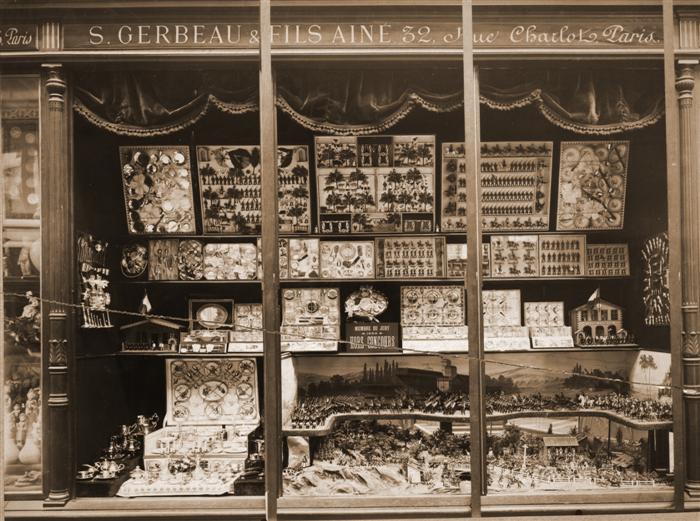 made little lead figures, about 2 inches tall and, painted in colorful uniforms, were charming but expensive, so they failed to find a wide market. Nevertheless, other makers, such as the German firm, Heyde, followed, so that by the end of the 19th century the market was established for the well-to do.
Then, just before the turn of the 20th century , 1893 to be precise, the English firm, William Britains, introduced a less-expensive line of hollow cast leads. These finally began to catch on with children. About 2 ¼ inches tall (still the  industry standard), these “little men”, depicted armies of England, America, France, Germany and their opponents. Such noted collectors as Winston Churchill and H.G. Wells can be seen in old photographs, playing with little armies of Britains toy soldiers on their rugs and lawns.
For the first half of the twentieth century, the only soldiers available were made of lead or a sawdust and glue mixture called "composition." It was during this time that companies like Sachs, Rapaport, Home Foundry, A. C. Gilbert and others began making metal (typically zinc) molds that were sold to sons and their fathers with the intent that they would melt pure lead and pour it into these molds thereby producing their own toy soldiers. The vast majority were of a military theme, though there were molds of animals, Buck Rogers, Dick Tracy and even Flash Gordon characters.
1966 marked a turning point in the history of toy soldiers. International concerns about lead poisoning brought about new laws which banned the manufacture of toys containing lead. William Britains, the best-known producer of 54mm metal figures, ceased production of metals and focused exclusively on plastic figures due to the new laws in England. Many other companies, like Timpo, Crescent and Cherilea, were forced to do the same. By this time many of the manufacturers of the metal molds were on the decline.
In the late 1960s and ‘70s, anti-war sentiment (particularly Vietnam and Korean wars) turned the tastes of the public away from military toys like toy soldiers. The rise of the plastic action figure, based on science fiction and fantasy movies, and the rising appeal of video games, changed the collecting interests of younger children.
In the mid-1970s, cottage industry companies like Tradition, Blenheim, Nostalgia, John Tunstill’s “Soldiers Soldiers” and Marlborough reintroduced metal soldiers, now made of pewter, antimony and tin, to the market. These “New” toy soldiers were better sculpted and better painted than their ancestors. As production was very limited, the price was much higher per figure, rising from a bare 50 cents to several dollars each. It was during the mid-1970's that Prince August established themselves in Ireland and began producing molds that allowed you to once again make your own "toy soldiers", this time from vulcanized rubber rather than metal molds.
By the early 1980s the metal soldier market was still miniscule. A newly resurgent Britains began to produce metal figures in a new alloy as early as 1973, but the production didn’t hit its stride for a decade or more.
Metal figures were primarily marketed to adult collectors who had been involved in the hobby for years. Most of the soldiers being produced replicated the ‘old toy soldier’ style, with poses devoted to parade and ceremonial stances. But younger collectors, raised on the action-packed poses they had seen in their childhood plastic figures, were ready for a change. Now the metal manufacturers began producing action sets, using new molding technology to bring about a more realistic style of figure. These new fighting poses, with far more detail in sculpting and painting than their predecessors, caught the imagination of an up-and-coming crop of collectors. Obliging established companies, like Britains, Tradition and Marlborough started to shift their focus from parade ground to battlefield.
By the 1990s, the “New” Toy Soldier was superseded in popularity among some collectors by an even more detailed style called 'photo-realistic.' These figures, typically priced around $20.00 each, were produced by makers such as Britains and Conte in mainland China. They were not only modeled to look like real people, but their paint jobs were as detailed as figures which only a year or two previously would have sold for 4 times the price.
Today we are seeing the advance of 3D printers being used to make original models ready to paint, Britains has been sold and resold a numer of times and now is owned by an American family, compaines like Prince August, The Dunken Company continue making rubber molds so that we can pour our own, and a growing market of folks like myself that miss the old models and seek them out on eBay so that we can replicate the past!
Comments